Kyle Alden Martens
Testimony
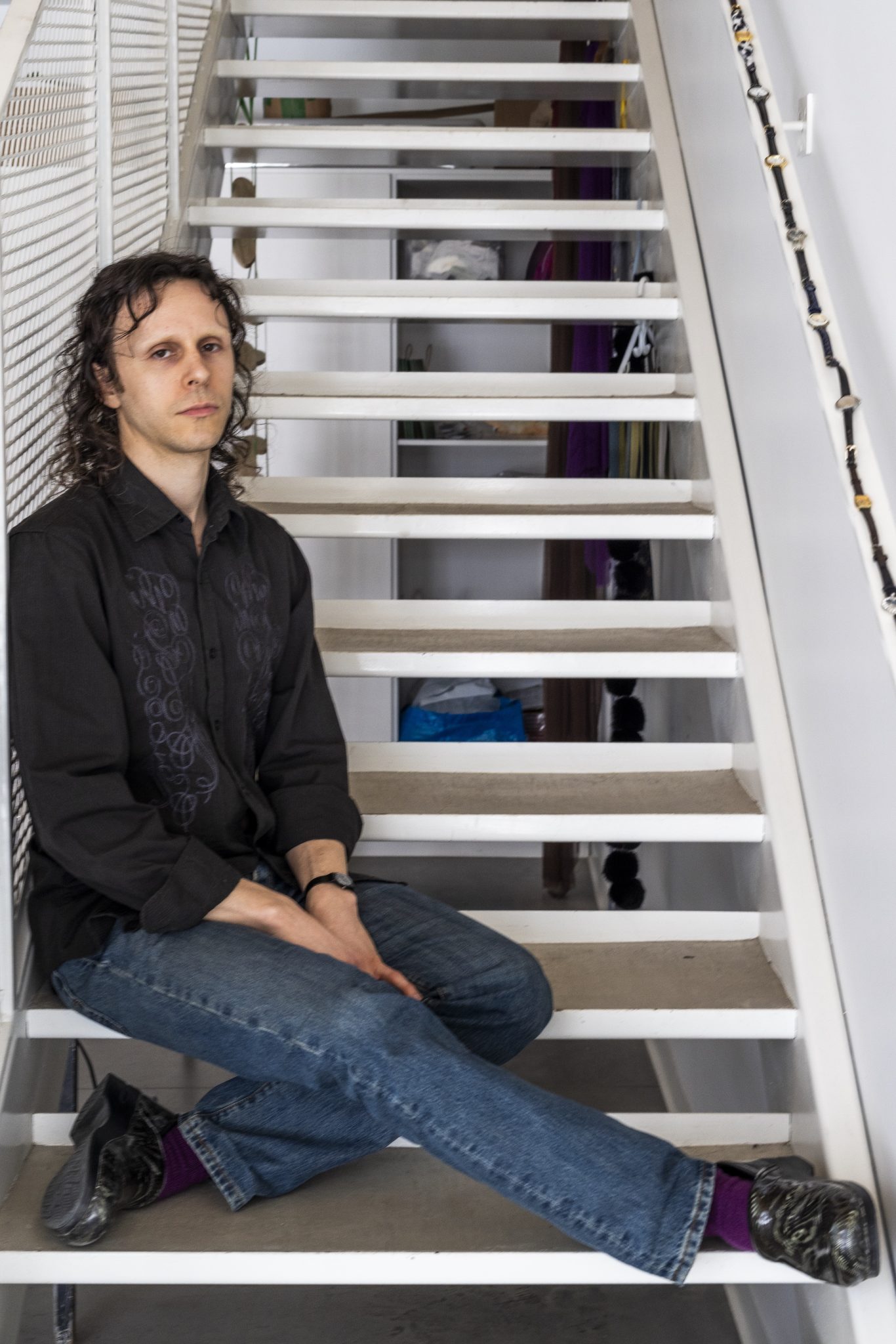
The forms of Kyle Alden Martens’s sculptures are often borrowed from clothes, which are transformed into ambiguous objects. Kyle’s installations open up a space for reflection around questions of gender and identity by challenging categories. When Kyle arrived at Est-Nord-Est, a few days after their exhibition Split Hairs opened at Diagonale, they hoped to continue this research with a material that was relatively new to them: wood. The residency became a space to catch their breath and to experiment, after months devoted to preparing their show.
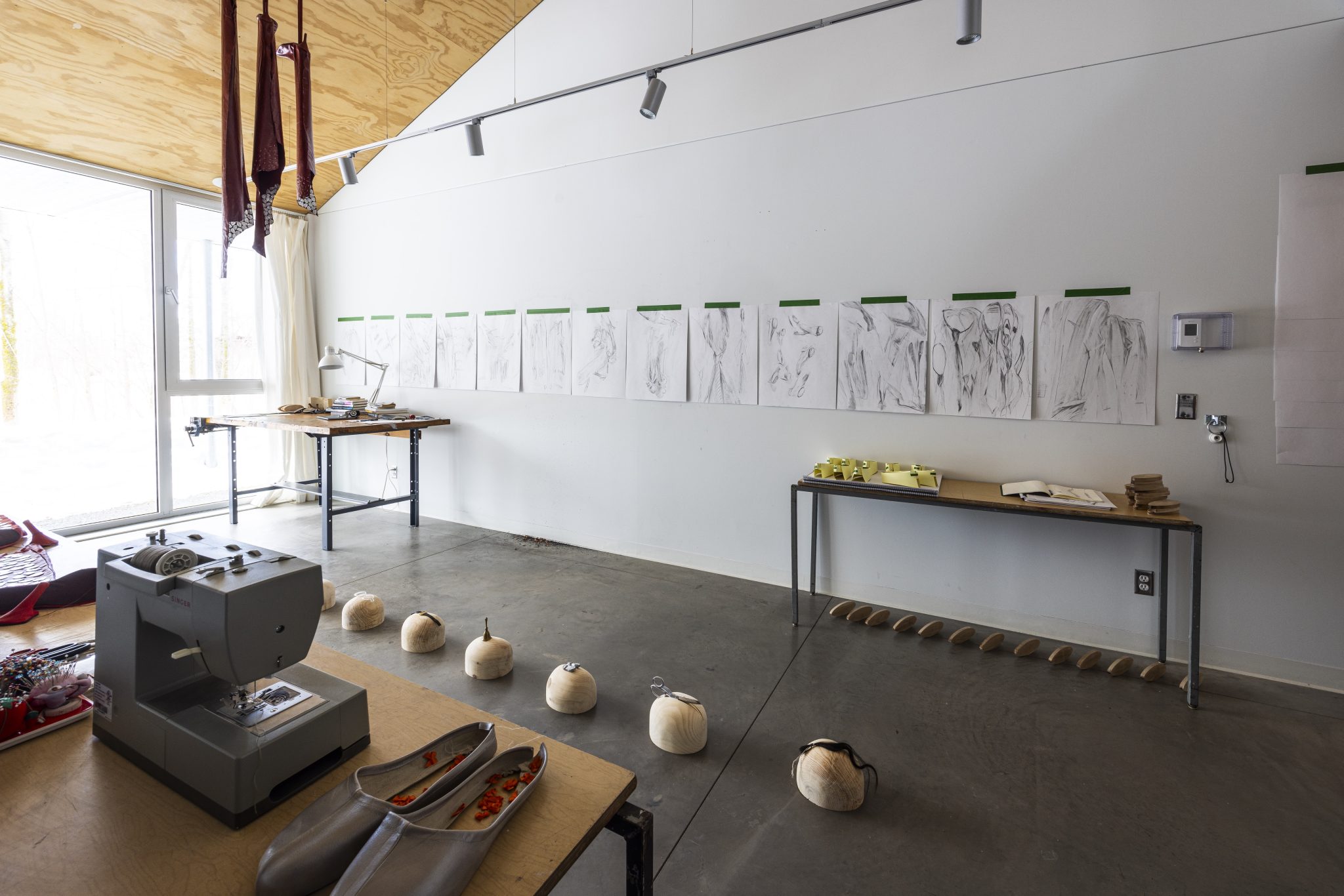
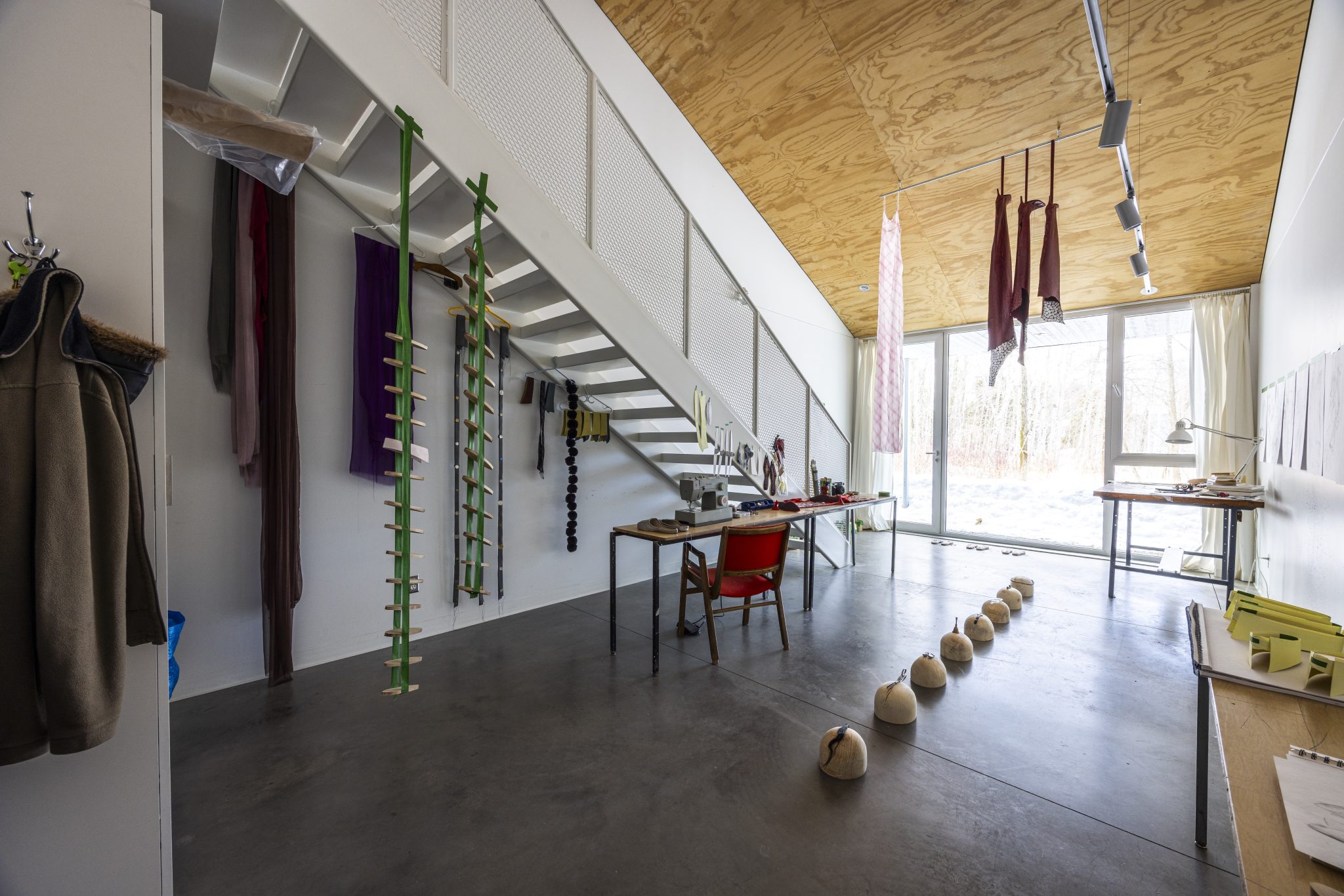
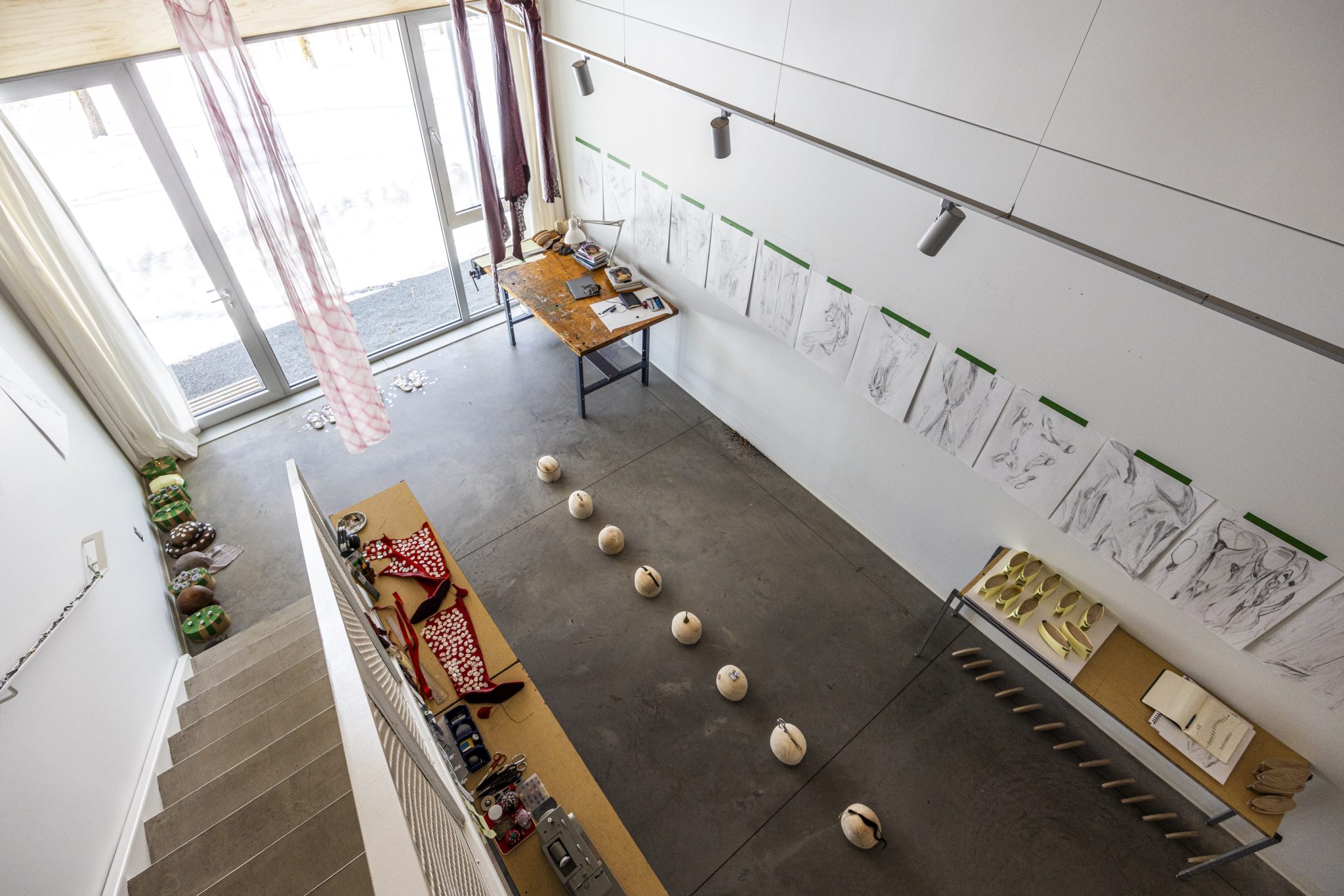
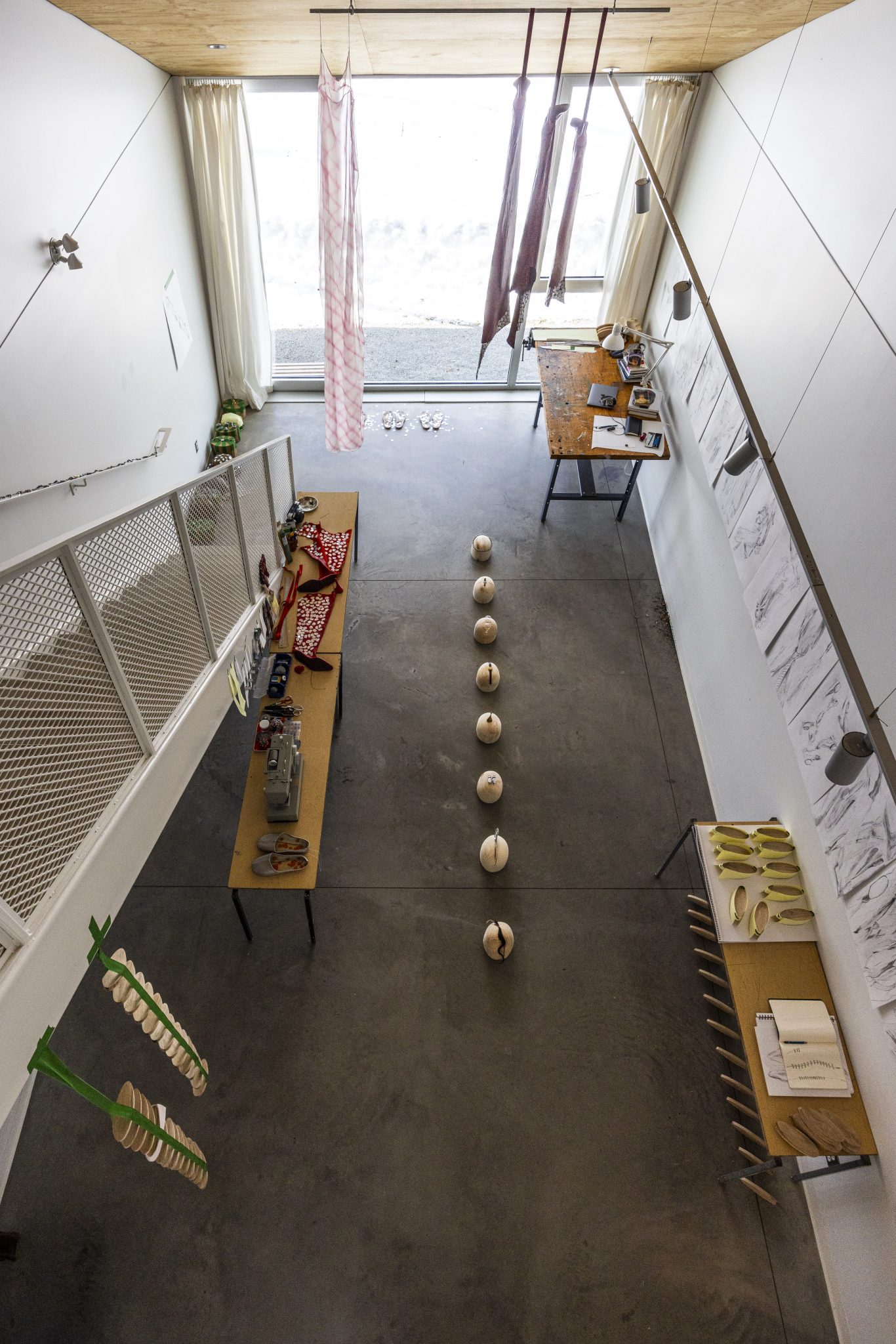
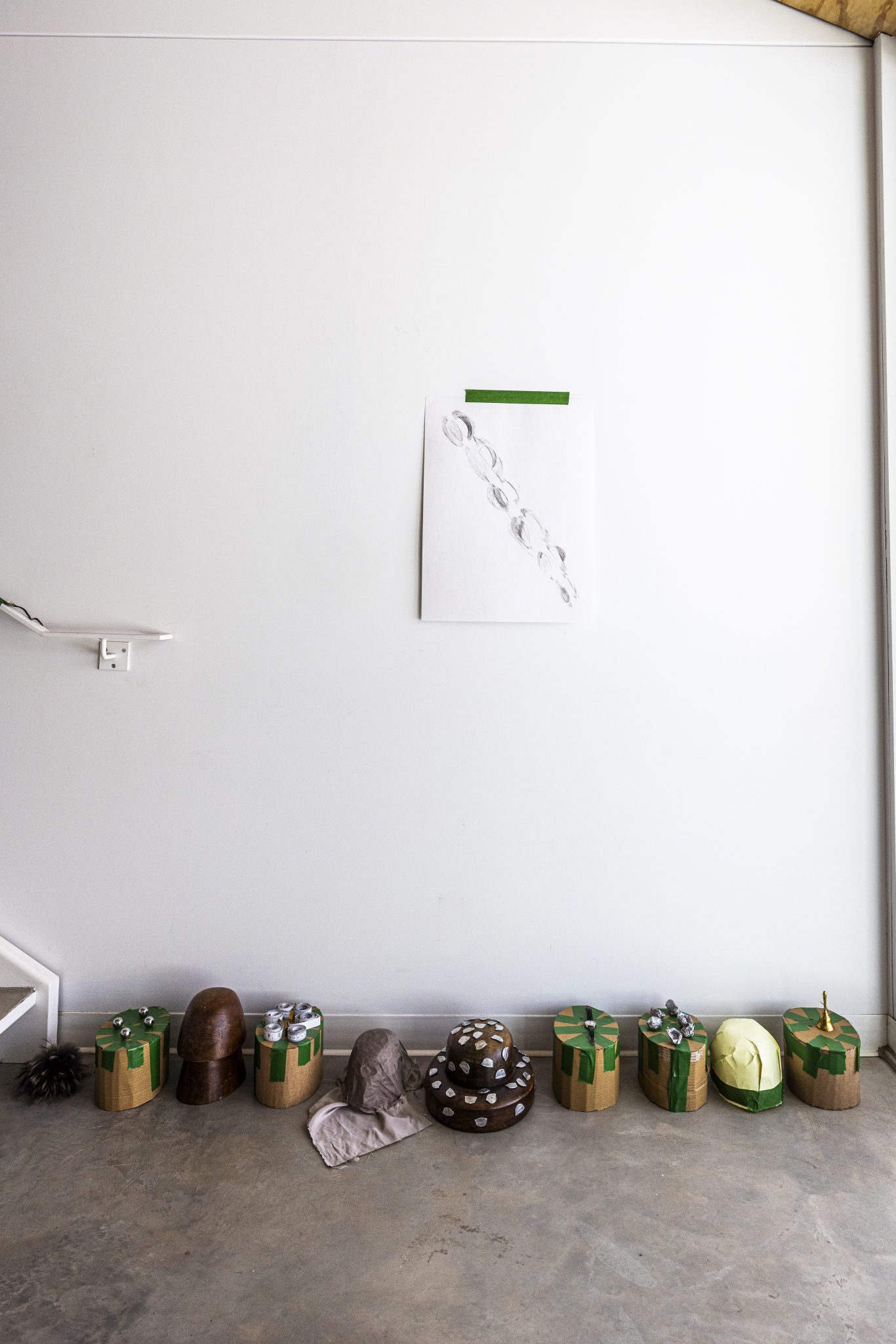
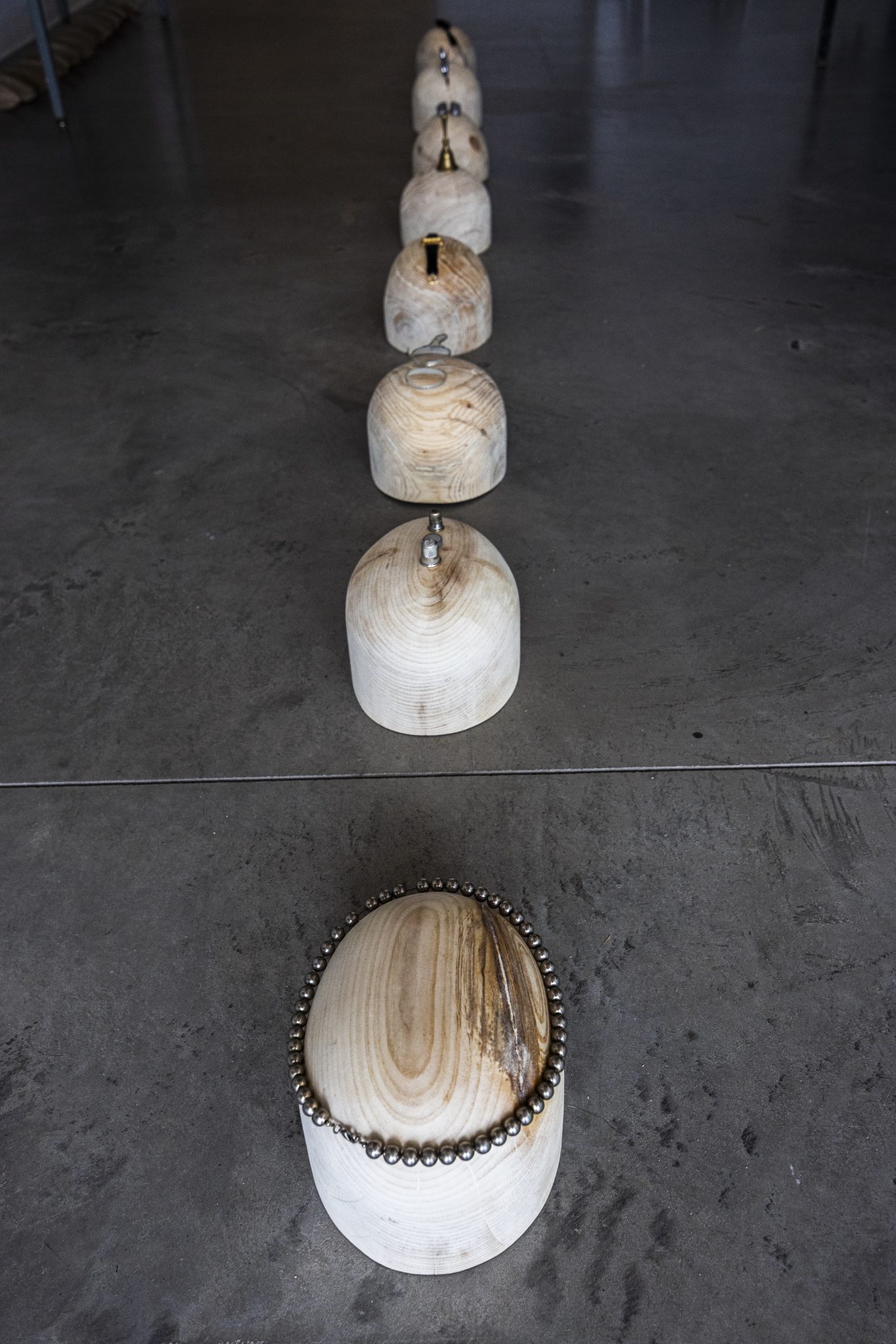
In the studio, a single question seemed to traverse Kyle’s work: How to keep sculptures open. Kyle was using leather and silk to create tension between stretched forms and instability. Wood, on the other hand, seemed at first to be rigid, almost too definitive. Kyle explored this question starting from an object that they had taken with them to several residencies: an old hat form. At Est-Nord-Est, they made several replicas of it and lined them up down the centre of the studio.
The studio’s dry heat cracked the hat forms. Rather than repair them, Kyle made the cracks bigger. They imagined a hat made from these altered shapes: as the fracturing form pushed the hat outward, the hat, in turn, would exert pressure on the form. There would be tension between what contains and what seeks to escape. Objects, Kyle told me, sometimes seem to have their own idea about what they want to become.
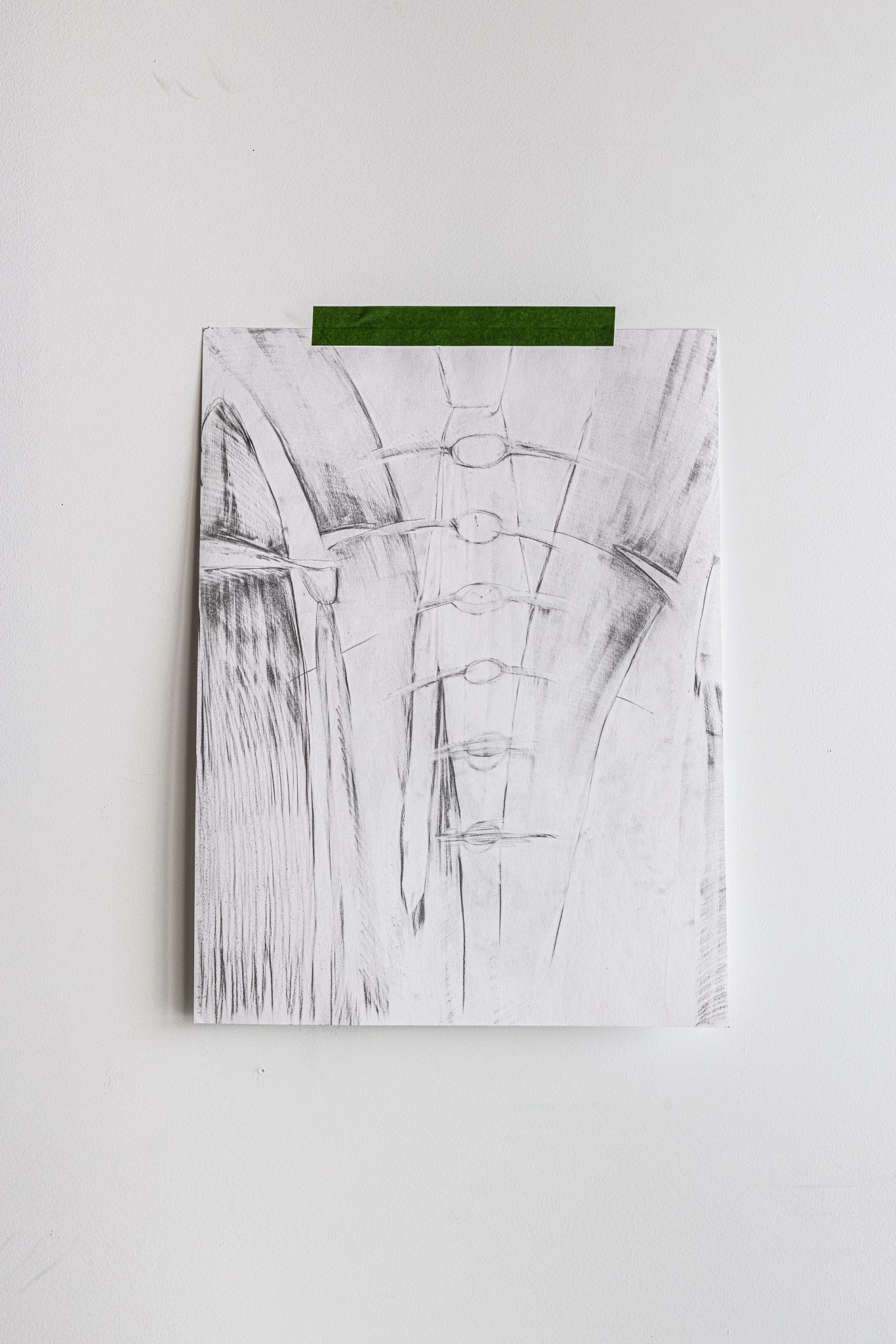
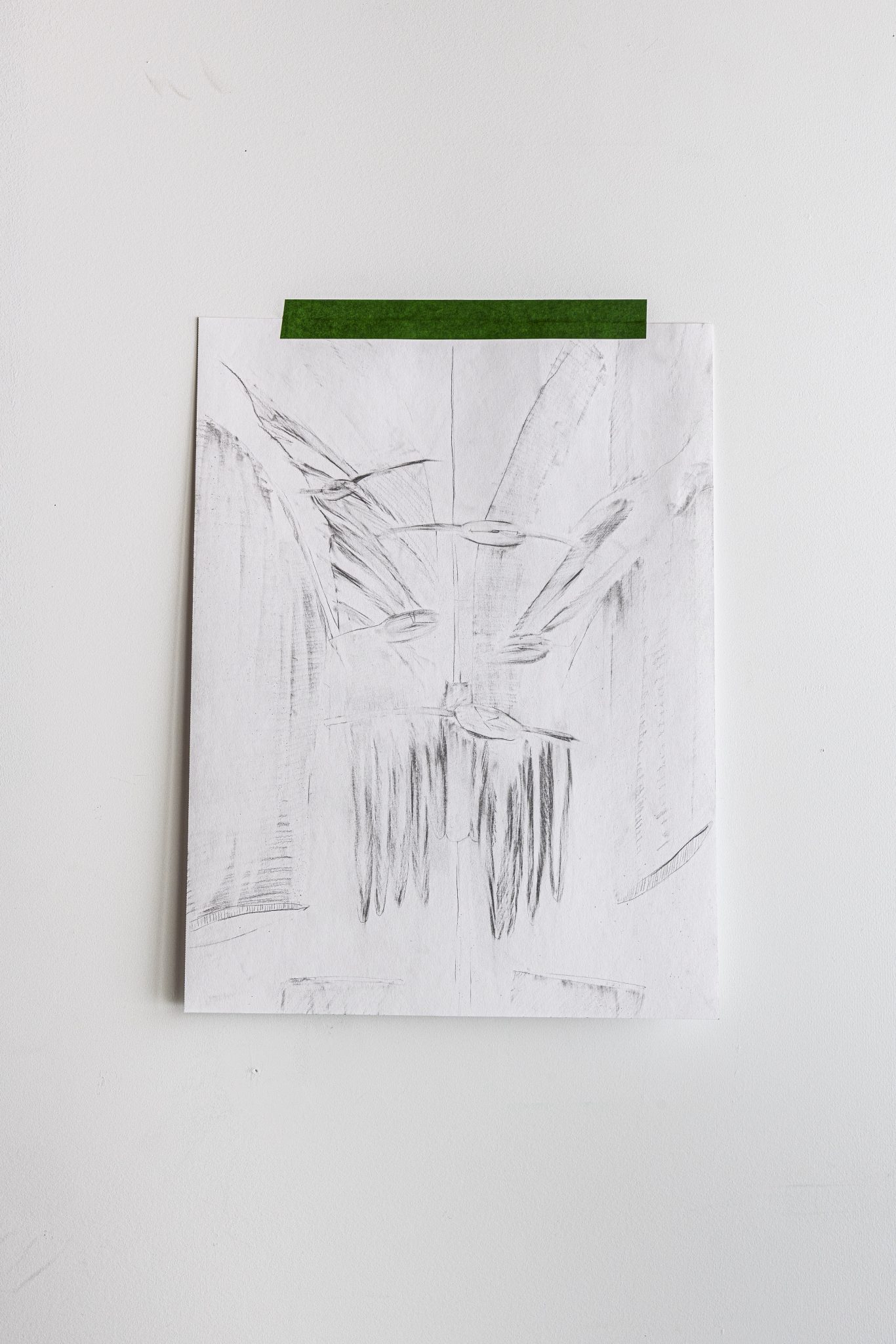
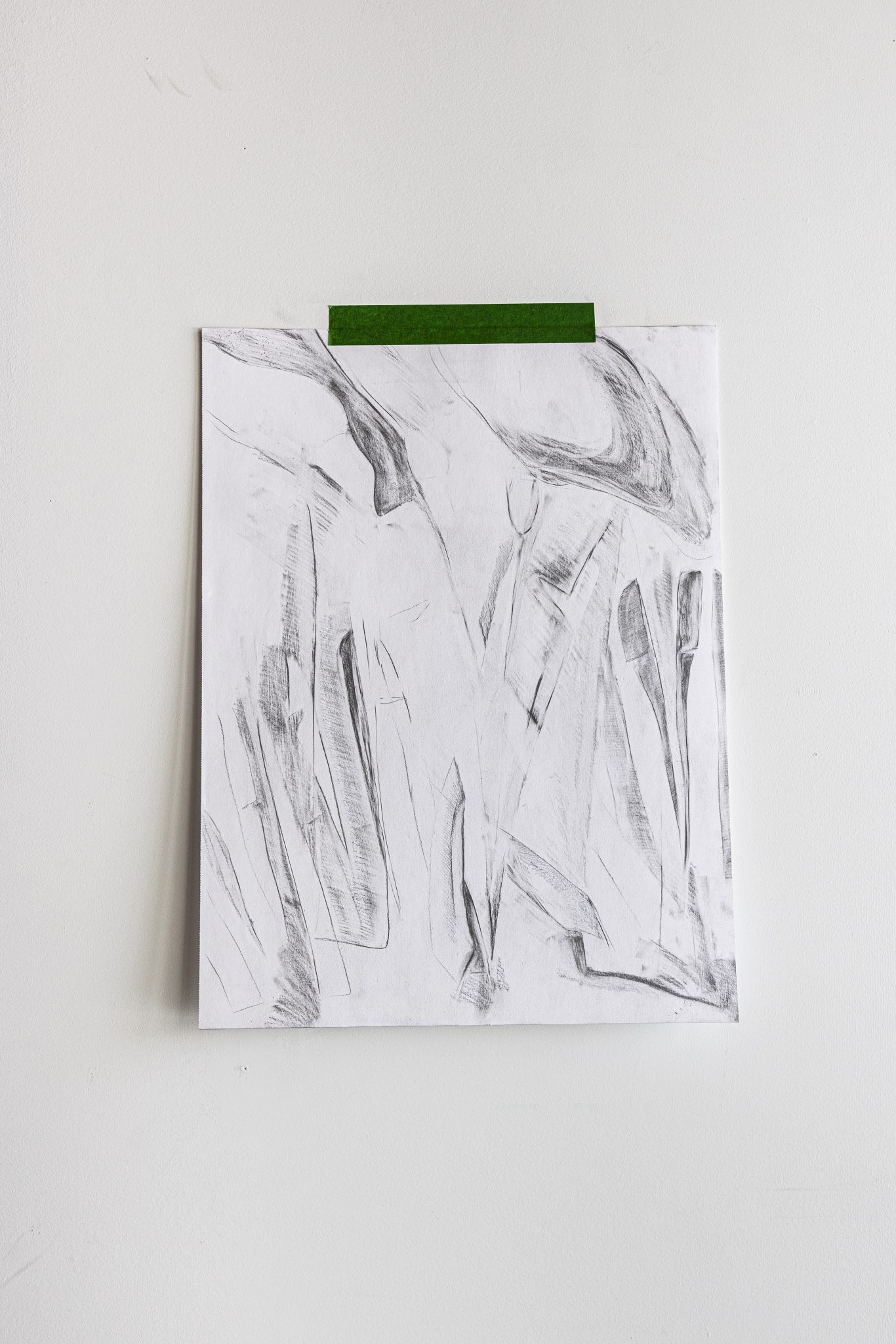
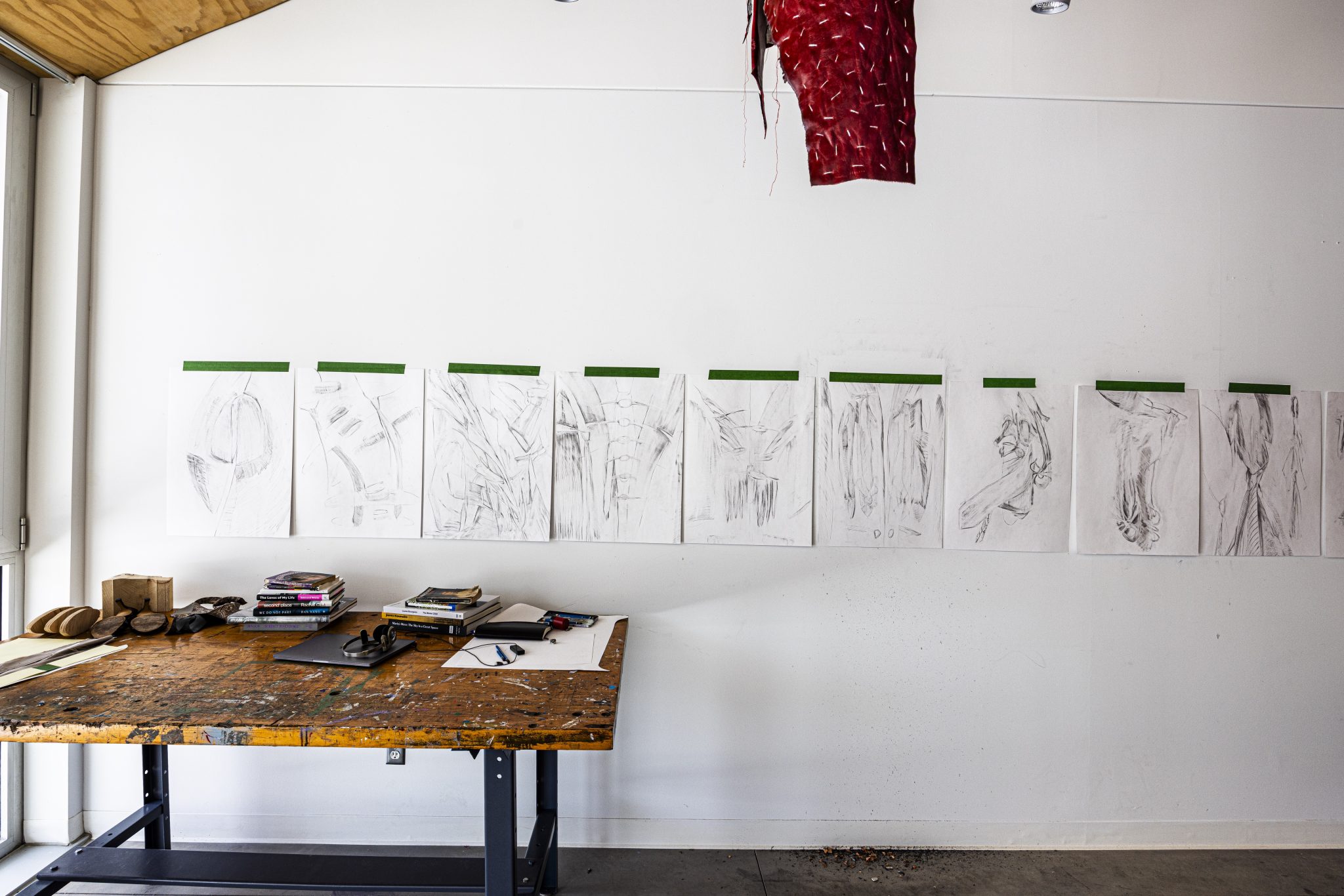
Kyle also spent a good deal of time during the residency drawing. Usually hidden in sketchpads, here the drawings were displayed on the walls in two long lines. Seeing them together, Kyle noted correspondences that had previously been elusive. Some shapes evoked garments or accessories in the process of being transformed into something else. Kyle wanted their sculptures to behave like their drawings, to have the same sense of movement, the same impression of disassembly.
This desire to maintain an effective tension among several states could be seen in other works. A pair of boots with heels full of horsehair seemed solid but collapsed under the weight of a body. The horsehair led the conversation toward what is present but hidden in Kyle’s sculptures. They showed me a pincushion. Today, pincushions are often stuffed with cotton batting or fabric scraps, but traditionally they were stuffed with horsehair or human hair, like the one Kyle was holding. The hair naturally oiled the needles stuck into the pincushion. “It’s disgusting but magnificent,” Kyle remarked. They find this ambivalence interesting: something that remains corporeal without being truly alive, hidden but present.
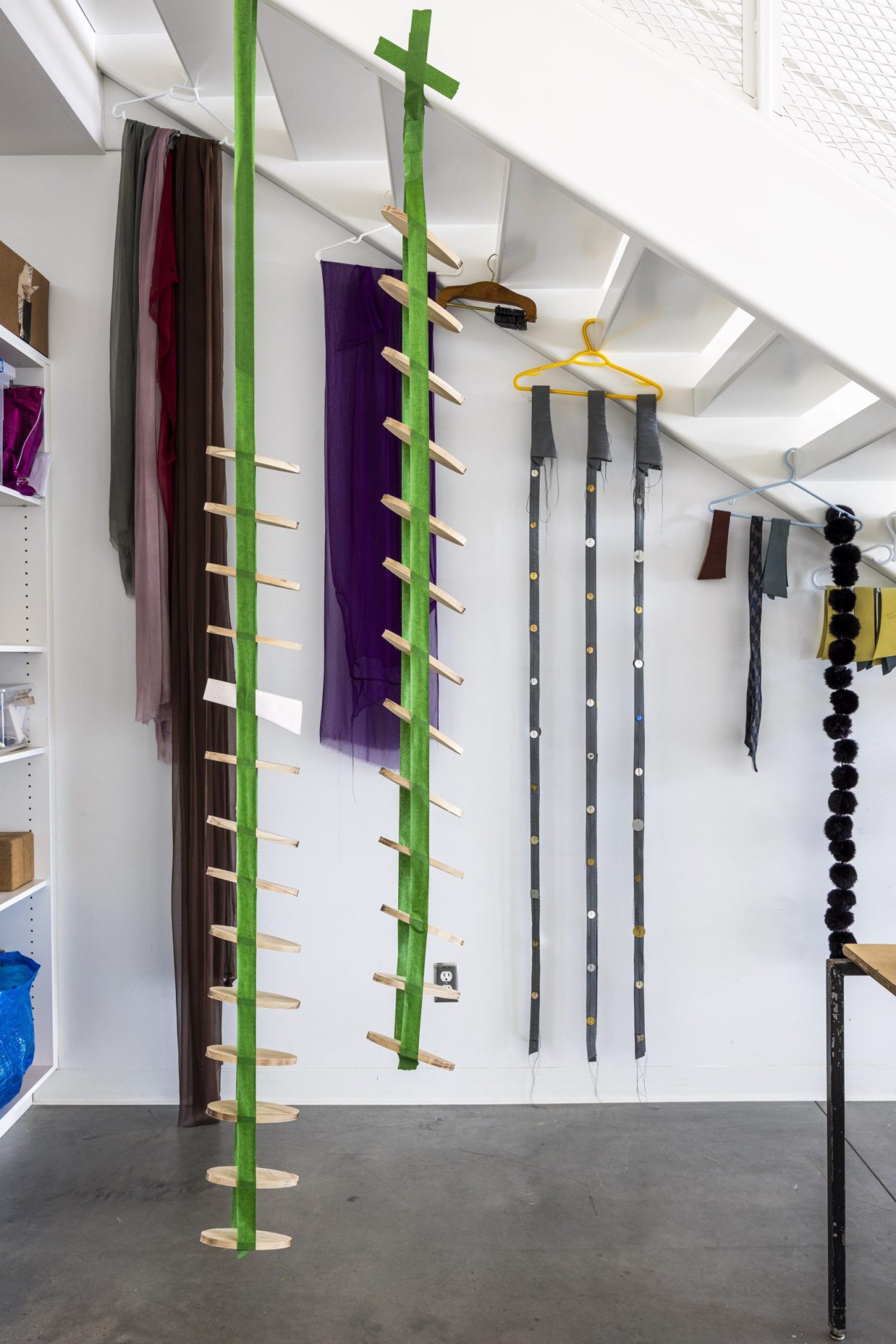
At the end of the residency, many objects were still unfinished. Oval wooden forms were assembled one above another in a hanging sculpture that resembled a spine. Or perhaps a violin neck. The sculptures Kyle had begun remained open, as if they were still hesitating among several possible futures.
Biography
Kyle Alden Martens is a Montréal-based artist working in sculpture, installation, performance, and video. They hold a BFA in intermedia from NSCAD University (2015), and an MFA in sculpture from Concordia University (2022), where they were supported by the Dale and Nick Tedeschi Arts Fellowship, the Joseph-Armand Bombardier Canada Graduate Scholarship, and the Fonds de Recherche du Québec – Société et culture. Martens has exhibited with Bradley Ertaskiran, Pangée, Circa Art Actuel, and the Leonard & Bina Ellen Art Gallery in Montréal, AXENÉO7 in Gatineau, and the Khyber Centre for the Arts in Halifax. Their exhibition PORTABLE CLOSETS has been shown nationally at Stride Gallery, Centre CLARK, and Eastern Edge Gallery. Martens received the Claudine and Stephen Bronfman Fellowship in Contemporary Art hosted at Concordia University. They are represented by Patel Brown, where they recently had a solo exhibition, Spun Through the Heel, that consisted of sculptural suit jackets, ropes, gloves, and shoes.
Discover
Newsletter
Keep up to date with the latest news!
Follow us
Thanks to the participation of