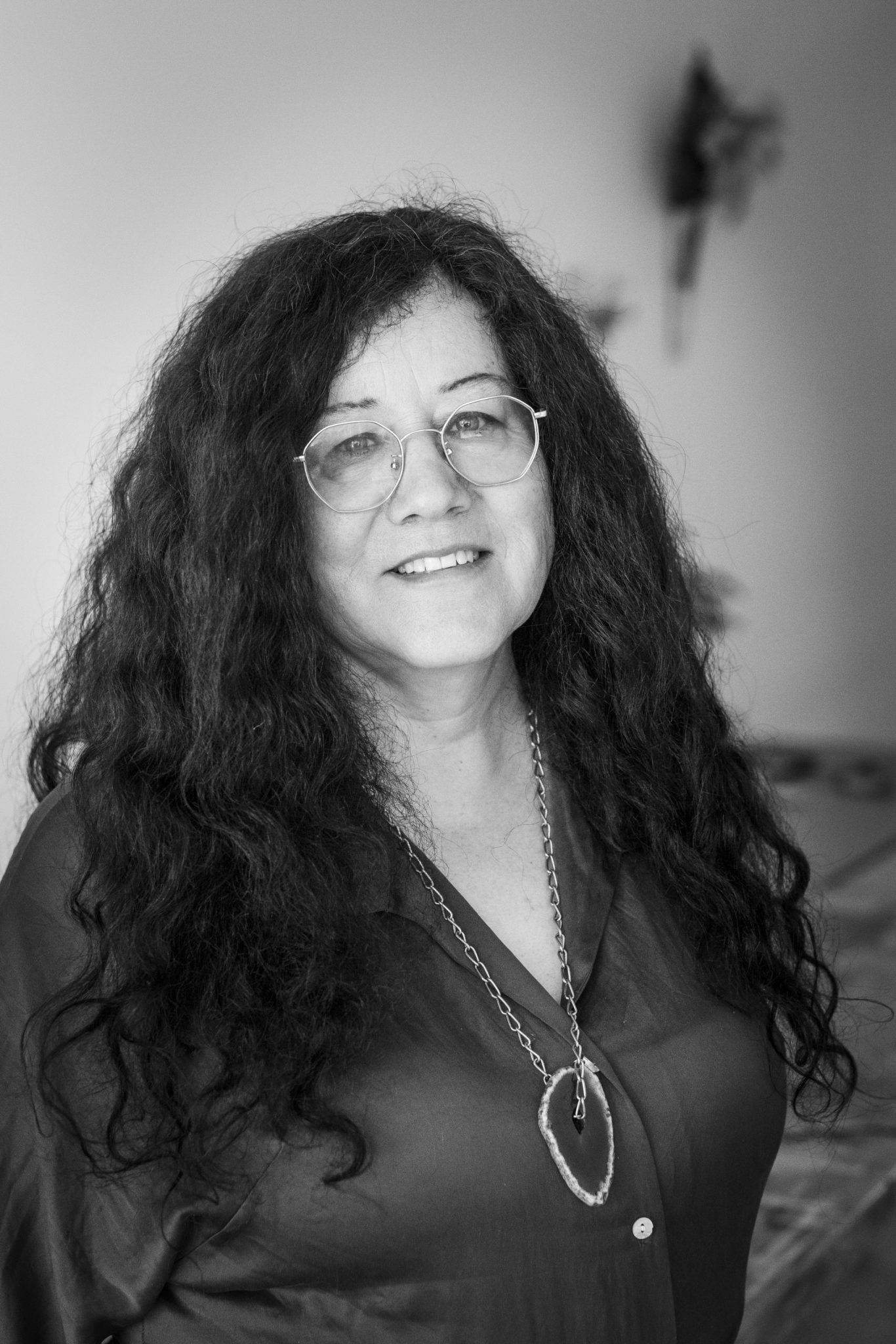
Janna Nicholas
Testimony
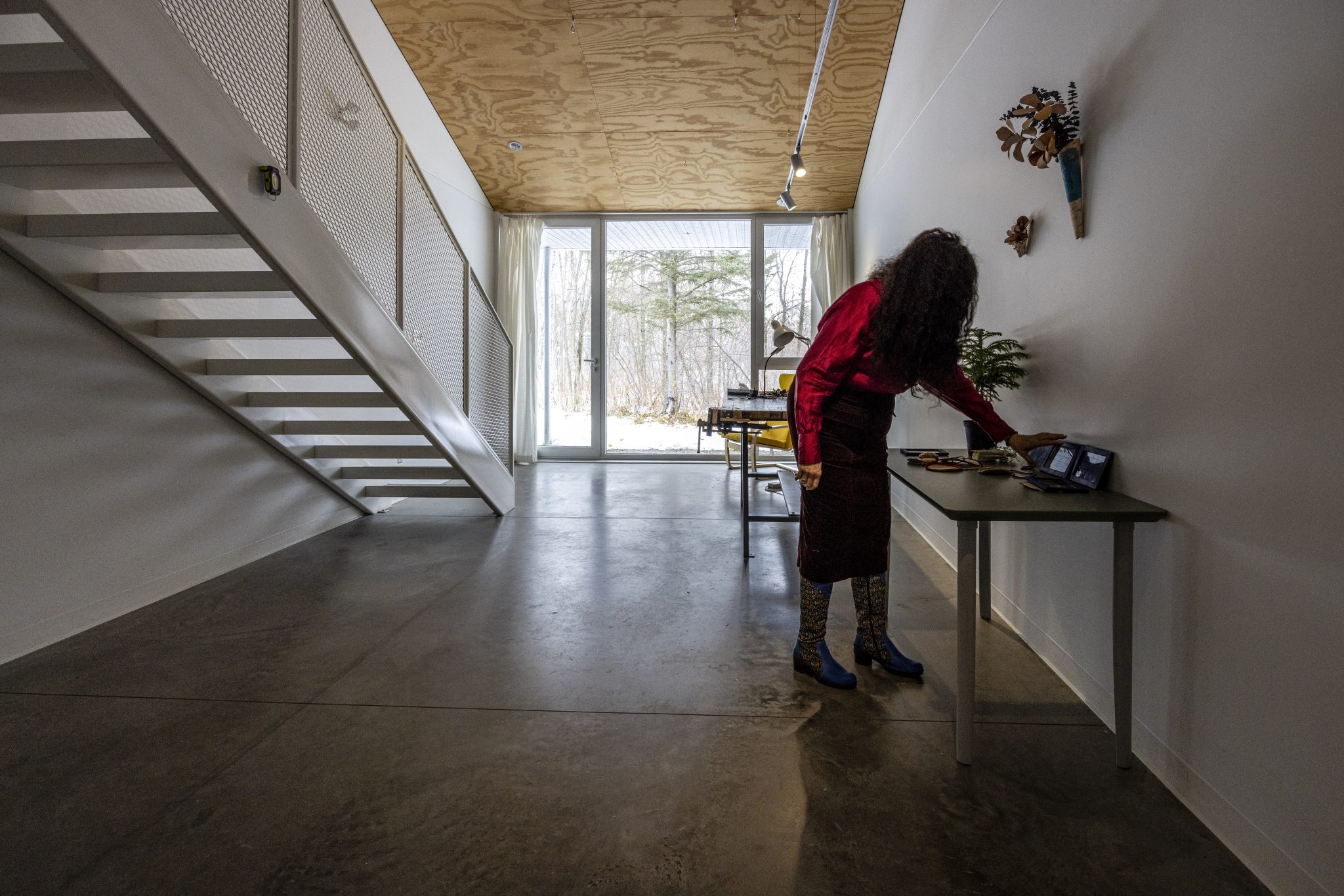
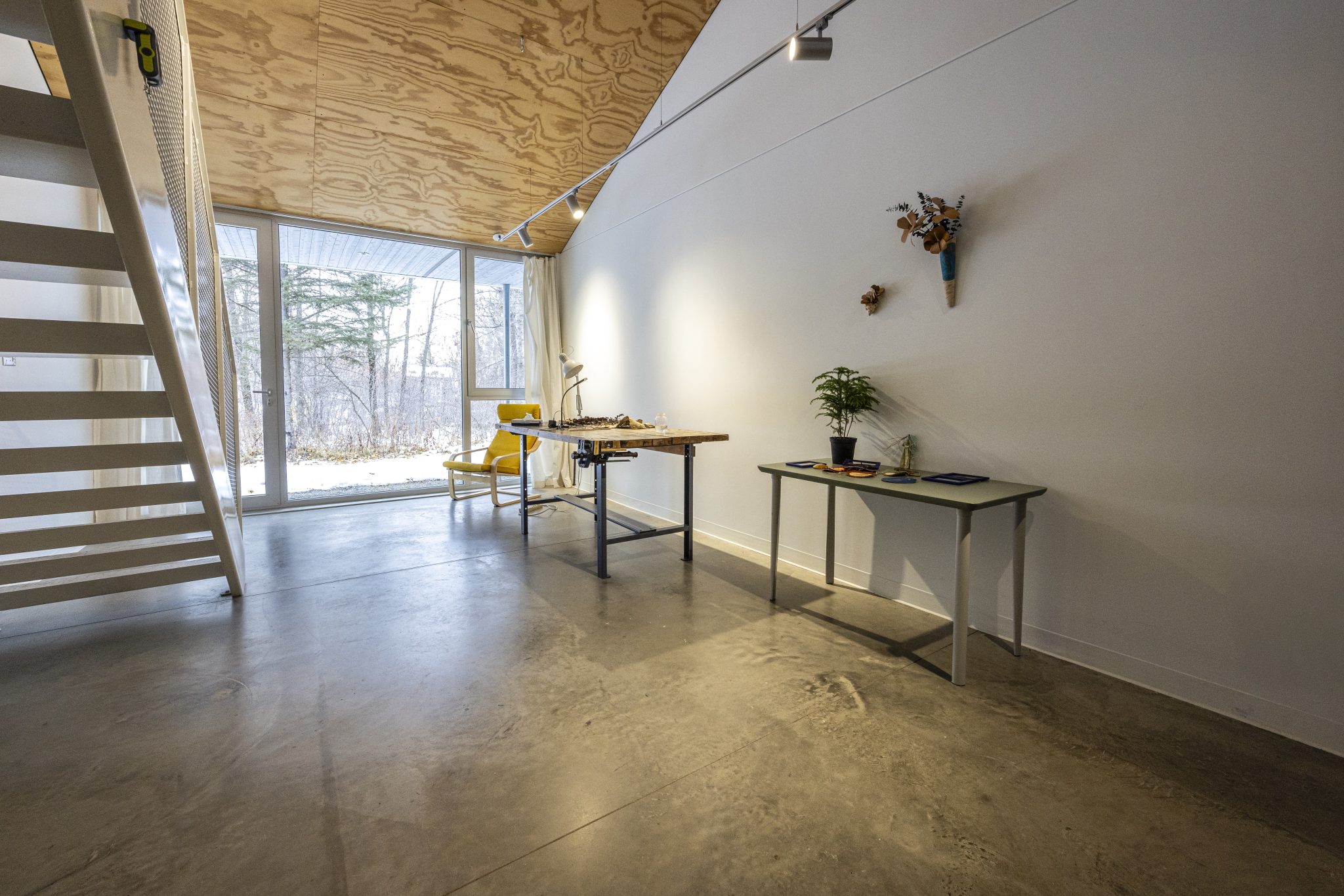
As the living world burst into colour and then was blanketed in snow, Est-Nord-Est transformed its space into a meeting place for the Wolastoqey Nation and its close analogues from other Indigenous nations and the Wabanaki Confederation. This residency, curated by Ivanie Aubin-Malo, brought together Catherine Desjardins and Janna Nicholas, along with visits from Martin Savoie, Kateri Nisnipawset Aubin Dubois, Léa Garneau, Terry David Young, Ariane Desjardins, Mélanie Brière, Marie-Eve Chabot Lortie, Marcus Merasty, Natasha Kanapé Fontaine, Angela Beek, Samaqani Cocahq. Although traditional creation and techniques were certainly a main feature of the residency, I learned during my visit that relationships were at its heart.
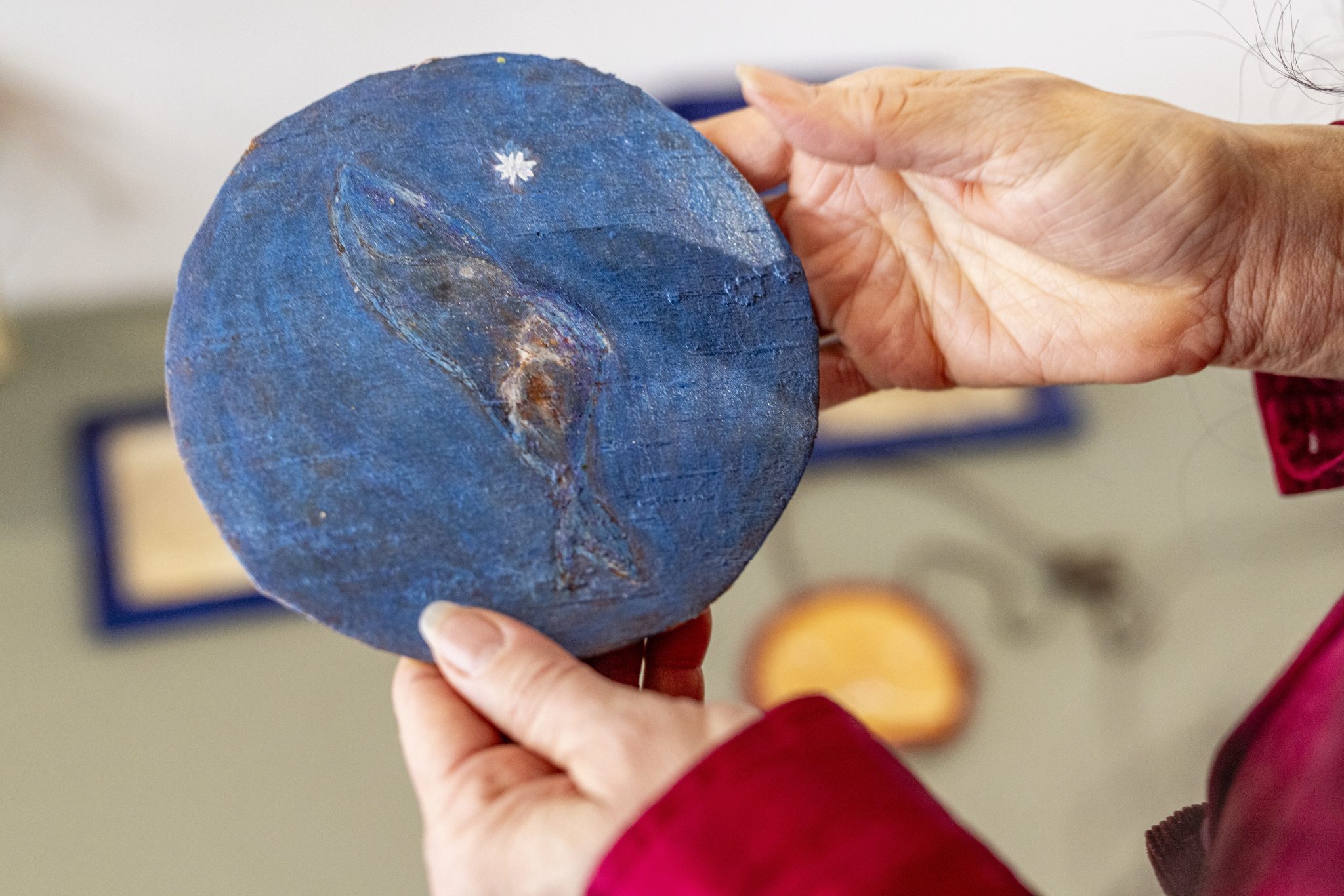
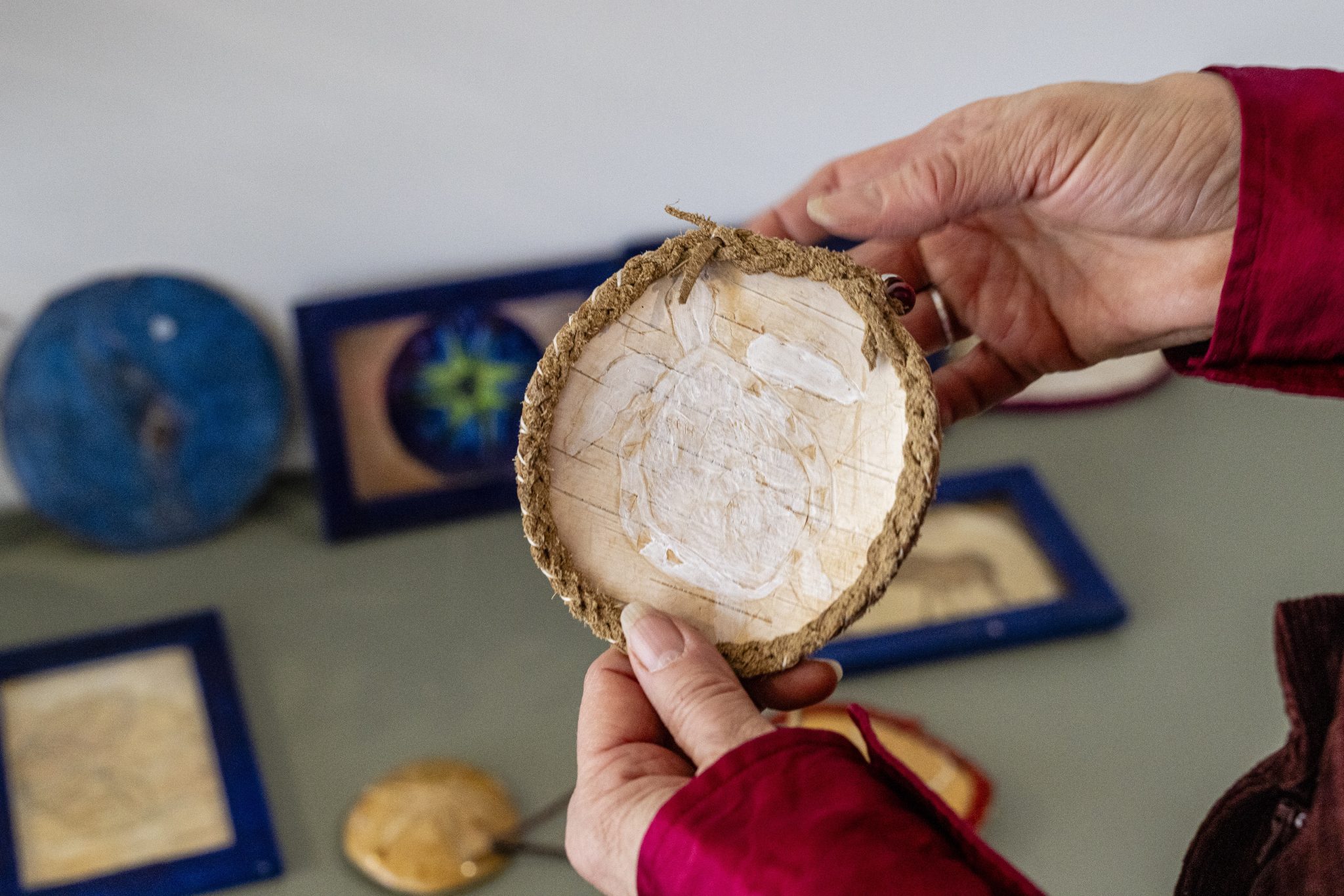
During our conversations, I noted Janna’s humility and generosity. The oldest of the artists who stayed for the entire residency, she considered Est-Nord-Est a “place for lessons,” explaining that “we are all here to learn from each other.” In her view, “as human beings, we have a sacred responsibility to the entire living world, to take care of what lives among us.” Indeed, I saw an overwhelming presence of life in her work, among both her materials and her chosen subjects. From her strong foundation in spirituality, she expresses herself in many ways; at Est-Nord-Est, she cooked meals for the other artists and taught people how to make good bannock, and at home she takes care of her four children, attends ceremonies, and creates works expressing her ancestral beliefs. She is particularly interested in forms that have high symbolic meaning for her nation and for other Indigenous nations of Turtle Island. For example, referring to the fact that we live on the turtle’s back and to this animal’s particular importance to her, she emulated the shape of its carapace to make her smudge bowl.
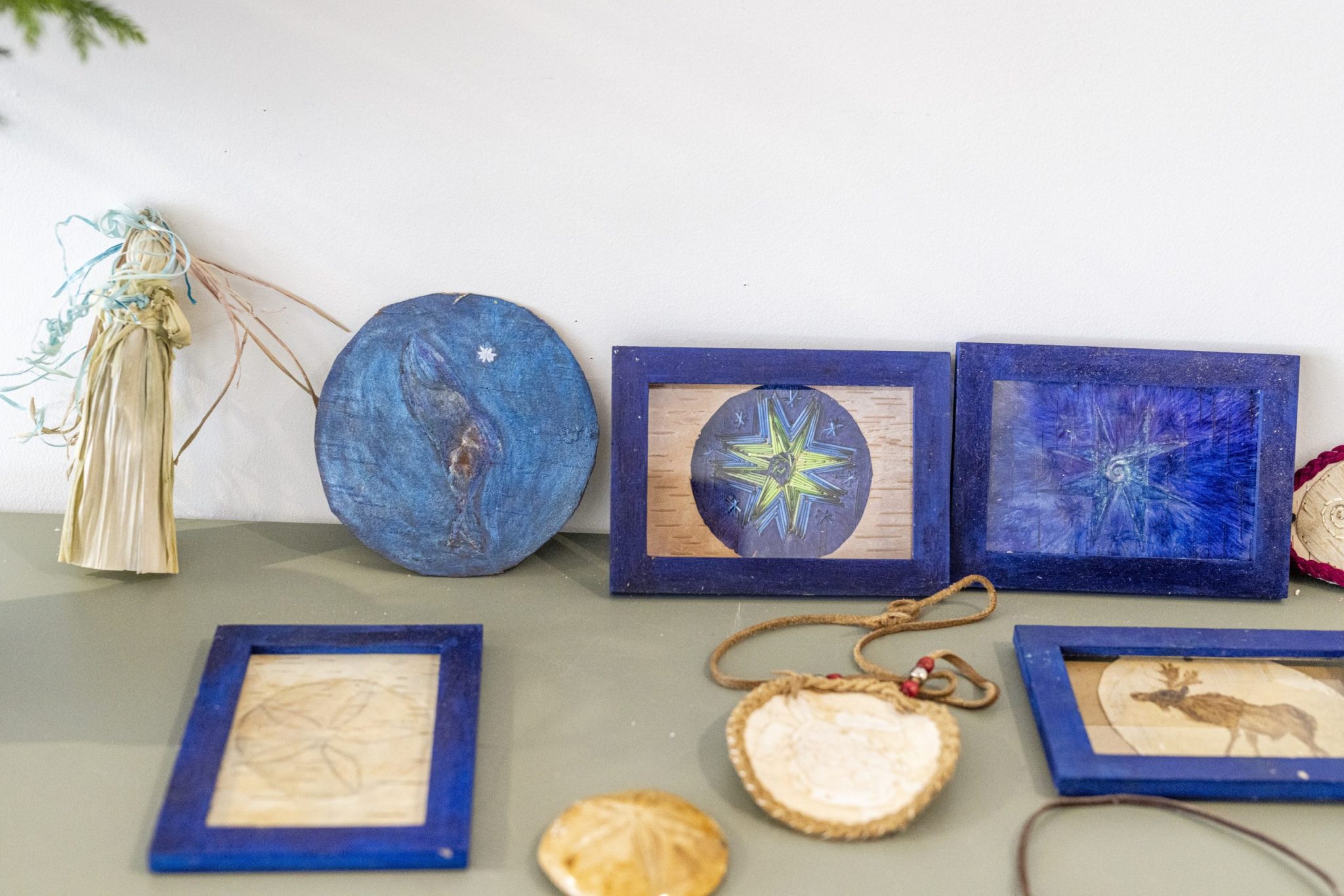
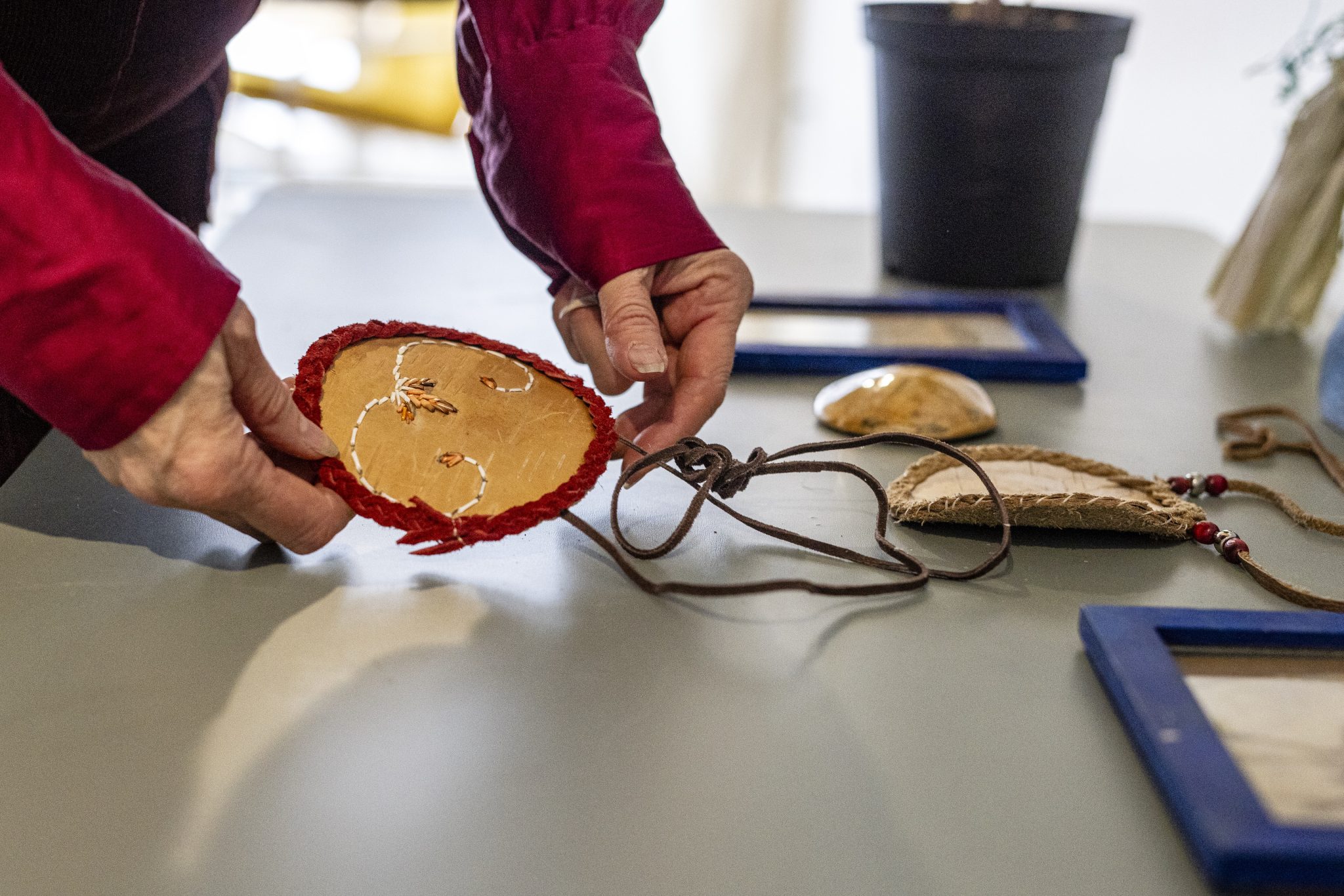
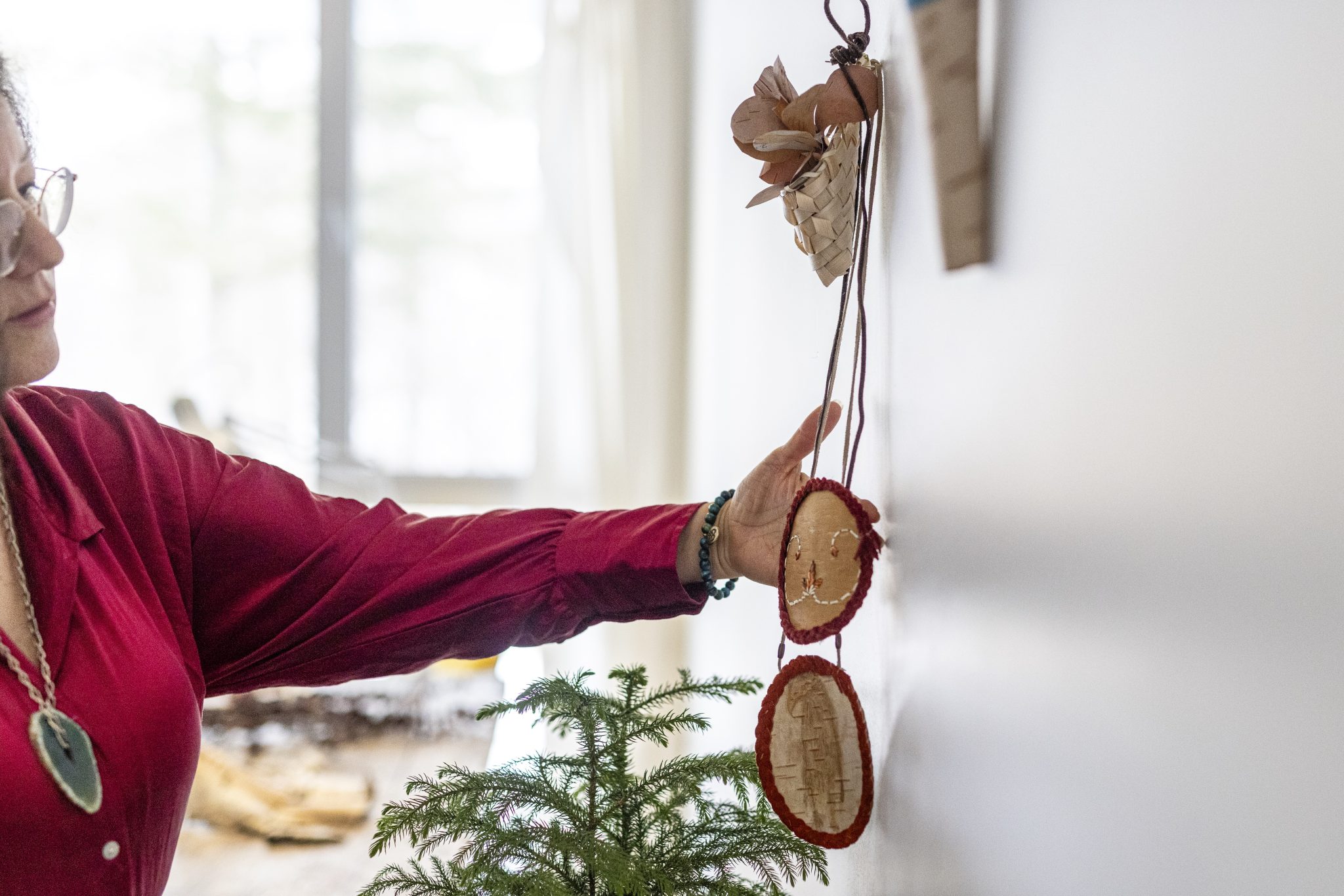
Janna is also a storyteller. Her works are imbued with narrativity. Working with birch bark, she has made drawings of great blue herons – particularly important in her community – and star women, visually recounting stories central to her culture. And so, she talked to me about her community’s origin stories, teaching me that Indigenous people come from the stars – more precisely, from constellations. She conveyed this in a porcupine-quill embroidery portraying a petroglyph of an eight-pointed star, an image with particularly strong symbolism. In this way, she conveys, in both gestures and art, her own vision of her nation’s stories and spiritual knowledge.
Biography
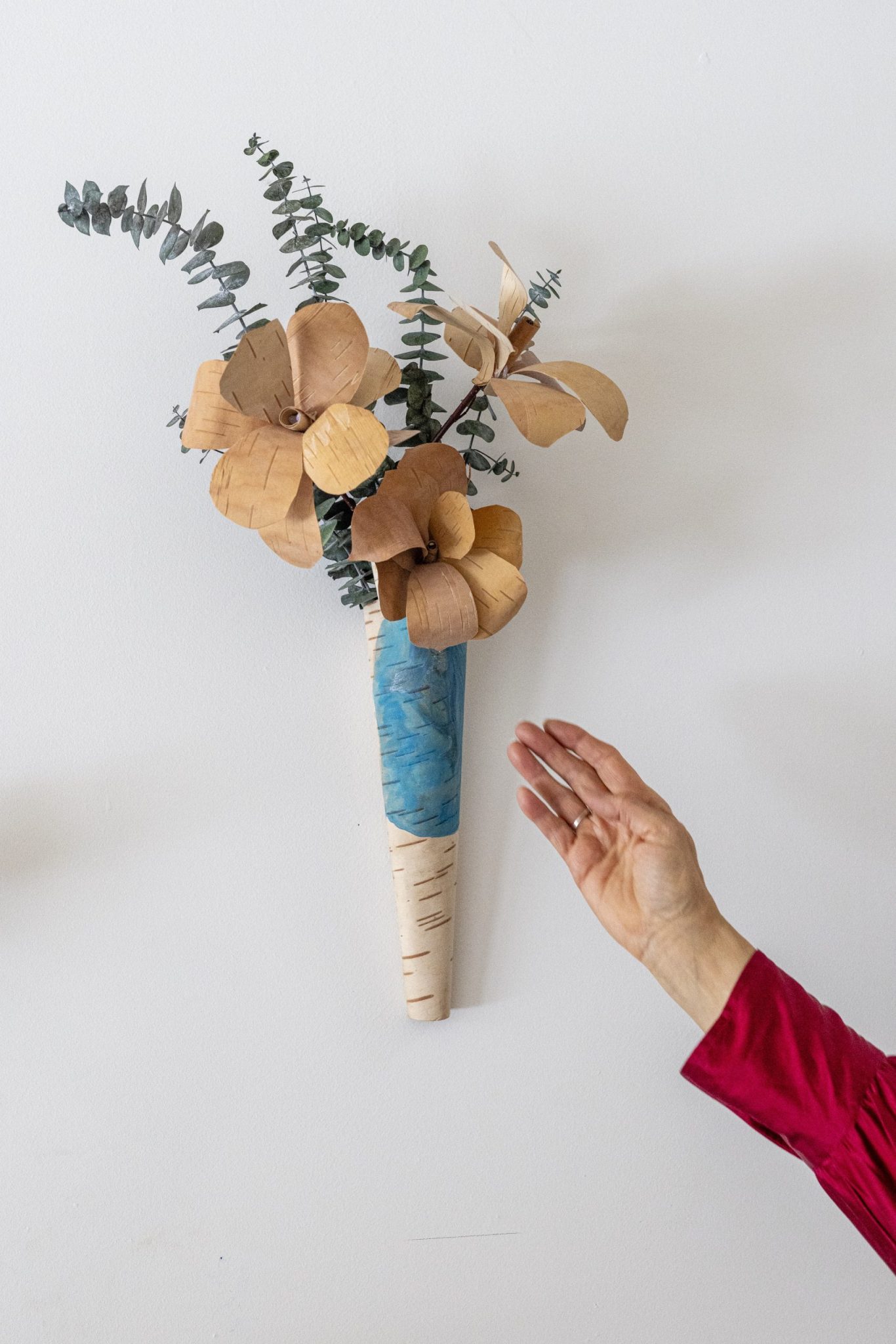
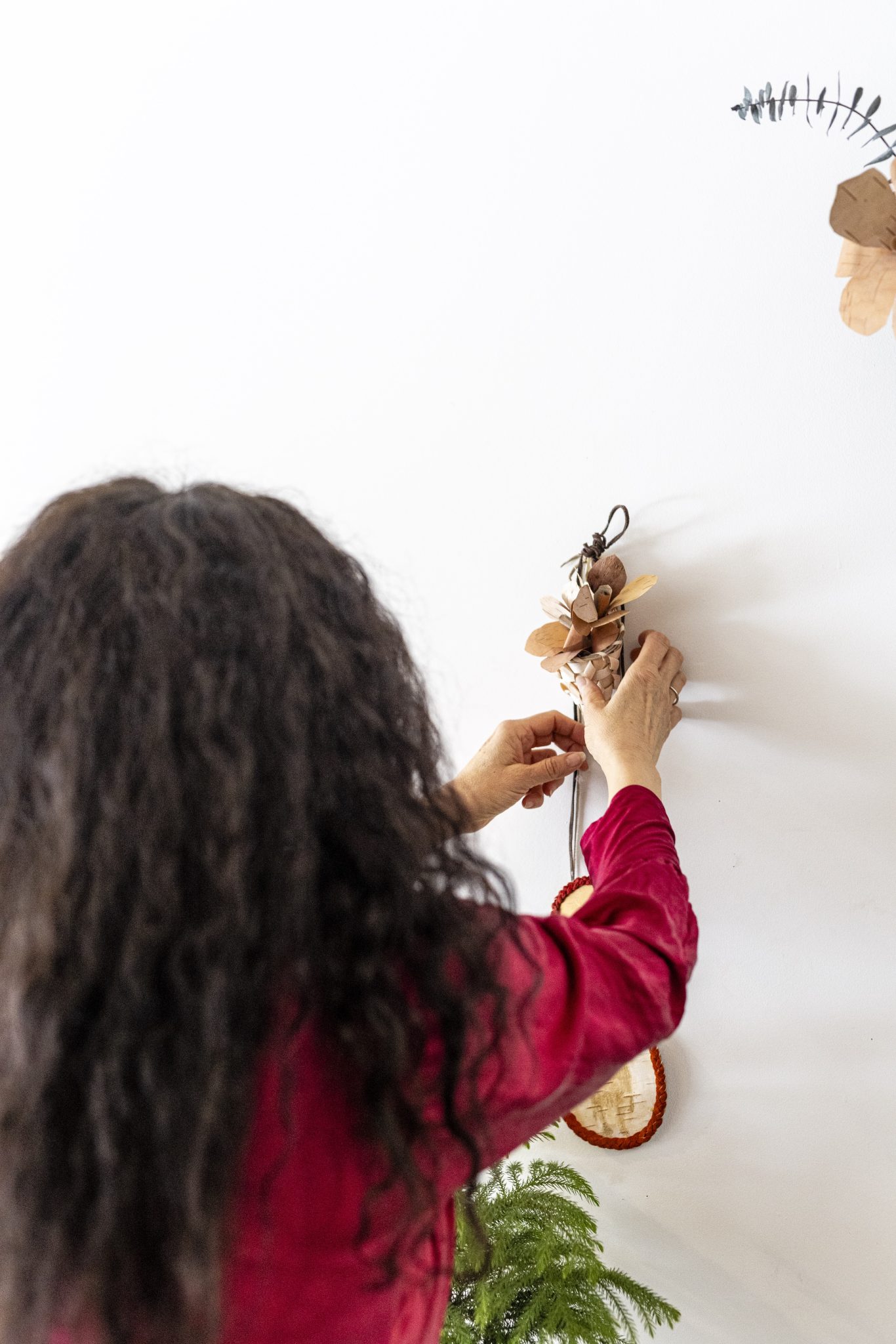
Janna Nicholas (Eagle Woman) is a Wolostoquey woman from Negutkuk. She is a birchbark artist who makes flowers, vases, jewelry, baskets and pictures adorned with traditional designs that tell stories of traditional beliefs. Her designs are etched and sometimes painted onto the bark. Eagle Woman has spent more than thirty-five years following the Red Road and has been a helper to elders in Ojibway, Mikmaq, and Wolostoquey territory. Her understanding of traditional ways and her time spent in nature have inspired her to create art that is reflective of her spiritual understanding of the world. She also works as a cultural advisor to the Parole Board of Canada, giving spiritual support to inmates at their hearings and providing cultural support to the board. She opens and closes the hearings with a prayer and ceremony. She also possesses a BSc in biology. She is the mother of four children who are now grown.
Discover
Newsletter
Keep up to date with the latest news!
Follow us
Thanks to the participation of